Bay City, Oregon looks like a name that could have been invented by a tourism committee. It sits directly on Tillamook Bay, so “Bay City” feels almost too obvious.
But the real story is more interesting. The town was platted in 1888 by Winfield S. Cone, and according to Tillamook County’s history of local place names, he named it after Bay City, Michigan, where he had lived before coming west.
That small detail connects this quiet Oregon Coast community to a much larger story about migration, transportation, fishing, timber and the changing role of Tillamook Bay.
Bay City was officially platted in 1888
Tillamook County records identify Winfield S. Cone as the person who platted Bay City in 1888. Instead of creating a completely new name, Cone carried one with him from Michigan.
By 1900, Bay City was one of several established communities along the eastern shore of Tillamook Bay, alongside Garibaldi, Hobsonville and Barview.
Today it is easy to think of Highway 101 as the spine of the North Oregon Coast. In Bay City’s early years, however, the water mattered just as much as the road.
Before the railroad, Tillamook Bay was the highway
For early settlers and coastal communities, Tillamook Bay served as a primary route for travel, supplies and commerce. The Oregon Encyclopedia notes that the bay remained the region’s principal travel and supply route until railroad service reached Tillamook County in 1911.
That means towns such as Bay City developed in a landscape where boats, sloughs, docks and tidal water were part of everyday transportation.
The arrival of the railroad changed that pattern dramatically. The first train reached Tillamook in November 1911 after traveling through communities including Wheeler, Rockaway Beach and Garibaldi. Rail access opened the county more directly to Portland markets, timber development and coastal tourism.
Tillamook Bay has supported people for thousands of years
The history of Bay City and Tillamook Bay begins long before the town was platted.
Archaeological evidence in the Tillamook Bay area documents human occupation going back thousands of years. The Salish-speaking Tillamook people lived around Tillamook and Nehalem Bays and were known for trade, canoe building and highly skilled basket weaving.
When writing about Bay City history, that deeper history matters. The modern town occupies only one chapter in a much older human relationship with the bay.
Oysters became another part of the bay’s identity
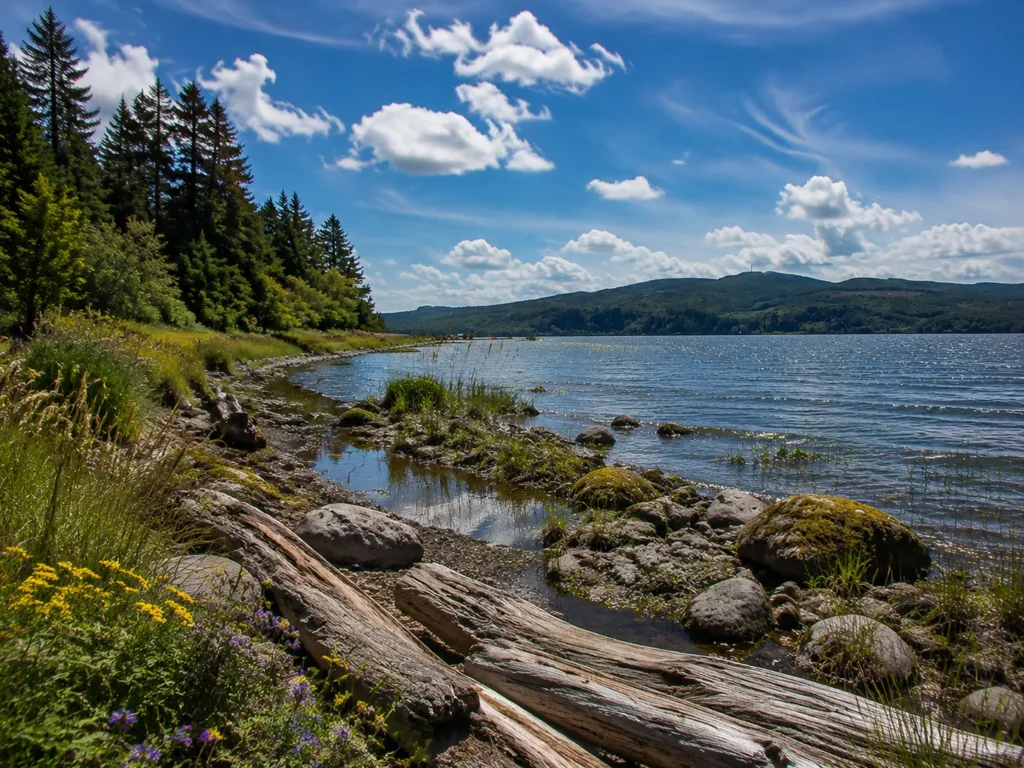
Tillamook Bay is not only scenic. It is a productive estuary supporting fish, shellfish, crabs, birds and other wildlife.
Commercial oyster growing in Tillamook Bay dates to the 1930s. State environmental records describe Tillamook Bay as one of Oregon’s leading oyster-producing bays during parts of the twentieth century.
That working-bay character is still part of what makes Bay City feel different from a purely resort-oriented beach town. The community sits beside an estuary shaped by fishing, shellfish, agriculture, transportation and changing coastal industries.
What makes Bay City, Oregon worth knowing?
Bay City is easy to drive through quickly on Highway 101, especially when travelers are heading toward Tillamook, Garibaldi or Rockaway Beach. But its history rewards a slower look.
The town carries the name of a Michigan community, grew beside a bay that once functioned as the region’s transportation network, and sits within a landscape shaped by Indigenous history, fishing, shellfish and generations of coastal work.
That is a lot of history packed into one small Oregon Coast town.