Dunes City, Oregon looks like a quiet lakeside community today, but the reason it became a city is surprisingly dramatic. Its incorporation in 1963 was closely tied to a national debate over how the Oregon Dunes should be protected — and who would control the land.
That story gives Dunes City one of the more unusual origin stories on the Oregon Coast.
Why Dunes City Incorporated in 1963
In the late 1950s, the National Park Service studied a large stretch of the central Oregon coast for possible preservation as an Oregon Dunes National Seashore. The proposed area included land around Woahink Lake, Siltcoos Lake and the dune country south of Florence.
Many local property owners worried that a federal seashore could eventually lead to land acquisition through eminent domain. Residents organized around the idea that becoming an incorporated municipality would give the community more control over zoning, roads, building rules and future land-use decisions.
The First Dunes City Government
Dunes City was formally organized in August 1963. According to the City of Dunes City’s own historical record, the first council meeting was held at the Woahink Lake home of Dr. E. S. Stong.
Philip Himmel became the city’s first mayor. Early council members immediately faced the less glamorous work of creating a functioning municipality: adopting a budget, counting the population for state revenue purposes, setting building and subdivision rules, establishing legal services and deciding how roads and sanitation would be managed.
A City Built Around Two Coastal Lakes
Dunes City does not have a traditional downtown in the way Florence or Reedsport does. The community is spread around Woahink Lake and the northwest shore of Siltcoos Lake, with forest, dunes and residential roads tying the area together.
Siltcoos Lake is the largest lake on the Oregon Coast, while Woahink Lake is unusually deep for a coastal lake. Together they give Dunes City a personality that feels more like a lake community hidden beside the ocean than a typical beach town.
The Oregon Dunes Still Define the Landscape
The federal national-seashore proposal that helped inspire incorporation did not happen in the form residents feared. Instead, Congress later created the Oregon Dunes National Recreation Area in 1972 as part of Siuslaw National Forest.
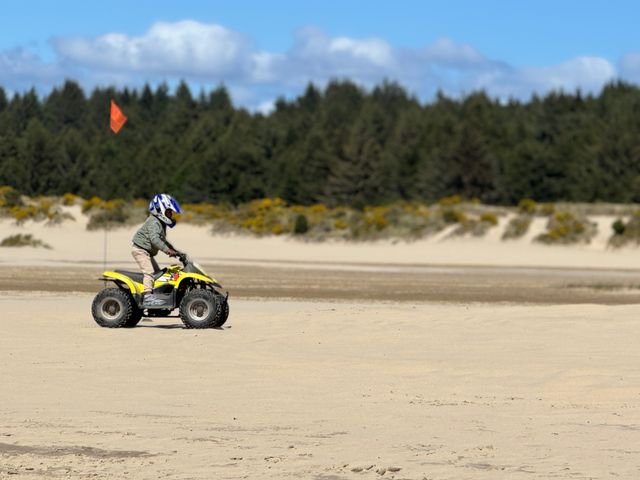
Today the dunes remain one of the defining natural features surrounding Dunes City. Wind-built ridges, freshwater lakes, shore pine forest and wetlands create a landscape that can feel completely different within only a few miles.
Fun Fact: Residents Helped Fund the First City Budget
One of the quirkiest details in Dunes City’s early history is that the new city could not immediately rely on the normal gas-tax and liquor-tax revenues available to established municipalities. Local residents who supported incorporation contributed money to help the new government get started.
That makes Dunes City’s beginning feel especially local: residents did not simply vote to create a city; some of them literally helped fund its first operations.
Why the Dunes City Story Matters
Dunes City is easy to drive through without realizing why it exists. But its 1963 incorporation tells a larger Oregon story about conservation, private property, local control and the long-running debate over how the coast should be protected.
Today, that history sits beside a much quieter reality: people fishing on Siltcoos Lake, paddling Woahink, watching osprey overhead and living among dunes and forest only a few miles from the Pacific.