There is a floor above the seals at Seaside Aquarium that visitors never see.
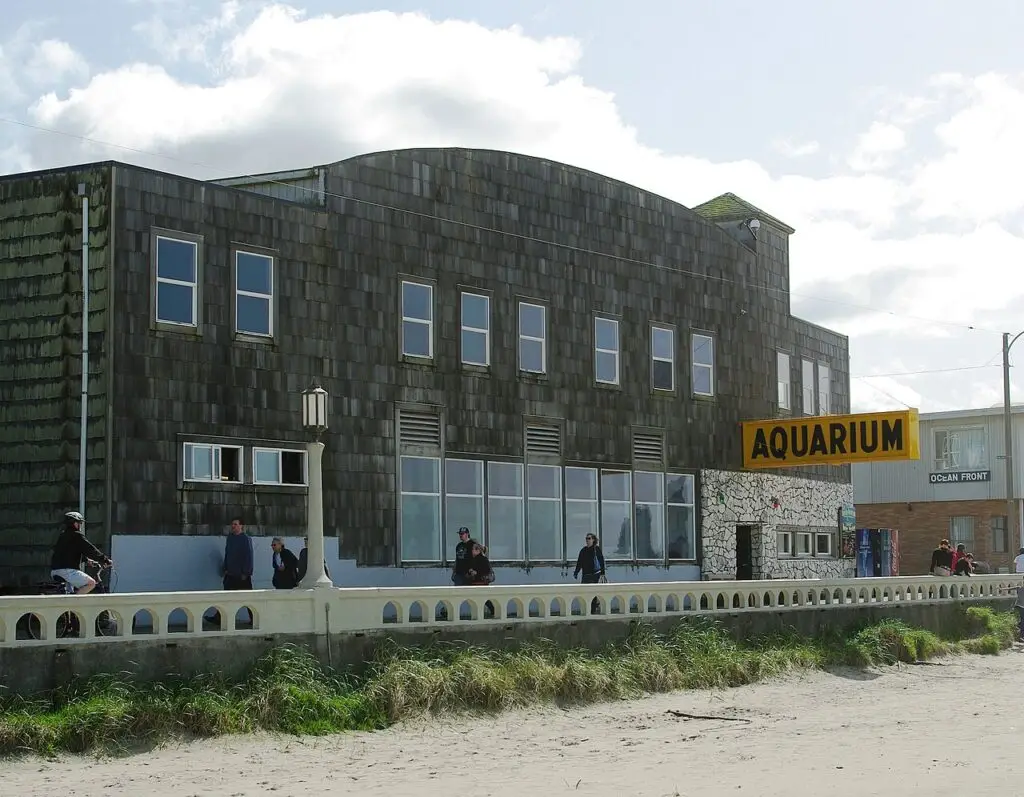
You can stand on the Promenade, hear the Pacific folding onto the sand, and watch children press their noses against the aquarium windows. Below, the seals bark and splash. Gift-shop doors open and close. Someone laughs over a cup of chowder.
But above it all sits another Seaside, one with warped floors, abandoned rooms, old plumbing, and a hallway that has been closed to the public for decades.
That is where the footsteps come in.
Not every night. Not on schedule. Ghosts, if ghosts are involved, apparently have no interest in office hours.
A Building with More Than One Life
Before it became one of Seaside’s best-known attractions, the building was something very different.
Constructed in 1924, it opened as the Seaside Baths Natatorium, a heated saltwater swimming facility. Ocean water was pumped into the building, warmed, and turned into a fashionable coastal experience. At the time, saltwater baths were a popular draw along the Oregon Coast.
The natatorium’s swimming-pool days did not last forever. After the building’s original use faded, it passed through several chapters, including periods of disuse and other temporary purposes.
Then, in 1937, it reopened as the Seaside Aquarium.
The aquarium occupied the main part of the old structure, giving the building a new soundtrack: barking seals, sloshing tanks, squeaking doors, and the constant low murmur of visitors. The aquarium would go on to become one of the oldest continuously operating aquariums in the United States.
But the building still had room above the exhibits.
In 1938, upstairs apartments known as the Sea Water Apartments were added. Residents lived above the aquarium for decades, close enough to hear the building’s pipes groan and the ocean pound the shore. Their windows looked toward the coast. Their bathtubs, according to historical accounts, were connected to the building’s old saltwater history.
For the people who lived there, this was home.
For everyone else, it was the mysterious floor above the seals.
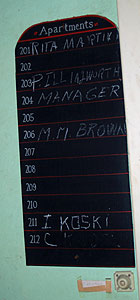
The remains of the former apartments include old fixtures, doors, and traces of the people who once lived there. Photo courtesy of Oregon Coast Beach Connection.
The Upstairs Is Closed
Residents continued living in the apartments until approximately 1976. After that, the upper rooms were closed, altered, and left largely inaccessible.
That detail matters. This is not a public attraction you can wander through with a flashlight and a nervous friend. The upper level is closed because of safety and refurbishment concerns. Old floors became unstable. Some areas were damaged or incomplete. The former apartments were never restored for regular public tours.
Oregon Coast Beach Connection was given limited access to the space in the early 2000s and described a strange time capsule: partial rooms, exposed wiring, outdated plumbing, crooked hallways, old bathtubs, and Murphy beds still tucked into their cabinets.
The place reportedly looked less like a tidy abandoned apartment building and more like a stage set after the actors had gone home.
A hallway ended abruptly. Doors no longer closed properly. Some floors tilted at odd angles. In certain places, the building seemed to sag into its own past.
And then there were the sounds.
What People Reported Hearing
According to Oregon Coast Beach Connection, some Seaside Aquarium employees in the early 2000s reported unexplained noises coming from the unused upper floor.
Other local folklore accounts describe the sounds as footsteps or movement in the old apartment corridors. The reports were not presented as a formal paranormal investigation, and there is no verified recording proving that anything supernatural was walking overhead.
Still, the story has lasted.
That may be because footsteps are one of the oldest sounds in a haunting tale. A bang can be a pipe. A rattle can be wind. But footsteps suggest intention. They seem to belong to someone going somewhere.
In the Sea Water Apartments, that imagined journey is easy to picture.
A pair of shoes crosses the hallway.
One step lands heavily on the boards.
Then another.
The sound pauses near a door that has not opened in half a century.
Down below, a seal barks.
The hallway answers with one final creak.
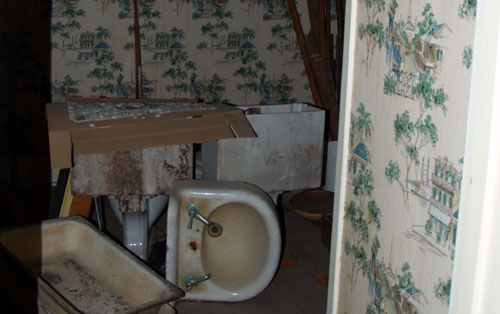
Old plumbing and bathroom fixtures remain upstairs, adding to the eerie atmosphere of the former apartments. Photo courtesy of Oregon Coast Beach Connection.
The Ghost in the Building, or the Building Itself?
The old apartments certainly look haunted.
That is not the same thing as proving they are haunted.
The aquarium’s history confirms the building’s age, its original use as a natatorium, the 1937 opening of the aquarium, and the addition of the Sea Water Apartments in 1938. Those records establish a real, layered history, but they do not establish paranormal activity.
Even local staff accounts are more cautious than the legend sometimes suggests. Oregon Coast Beach Connection reported that aquarium manager Keith Chandler had heard the rumors but did not believe the building was haunted.
That leaves us with two stories.
The first is the ghost story: something remains upstairs. Perhaps it is a former resident, still following the habits of ordinary life. Perhaps it walks the hallway because it once lived there. Perhaps it does not know the apartments are empty.
The second story is more practical, and possibly just as interesting.
Old coastal buildings make noise. Wind pushes against loose siding and window frames. Pipes expand and contract. Plumbing knocks inside walls. The aquarium below produces vibrations. The ocean sends a steady rumble through the structure, while footsteps on the Promenade and activity around the building can travel in surprising ways.
A warped floor may creak under changing temperature. A loose fixture may tap against a wall. A distant sound may bounce through an empty corridor and arrive from the wrong direction.
In other words, the Sea Water Apartments have plenty of perfectly ordinary ways to sound extraordinary.
That does not make the reports boring. It makes them believable.
A haunting, after all, often begins with a real place, a real sound, and someone brave, or unlucky, enough to notice.
A Place That Remembers
The most unsettling part of the upstairs story may not be the footsteps.
It may be the evidence that people really lived there.
A tenant board still carries names. Breakfast nooks remain tucked into old rooms. A doorbell bears a note saying it does not work. Bathtubs sit where they were left, as if someone might return with a towel and a bar of soap.
These remnants give the building a human pulse.
The Sea Water Apartments were not built as a haunted house. They were built for residents. People cooked meals there, answered doors, slept through winter storms, and listened to the aquarium below. They watched Seaside change from a small resort town into the busy coastal destination it is today.
Then the apartments emptied.
The aquarium continued.
The seals kept barking.
The ocean kept breathing against the shore.
And somewhere above the tanks, according to local reports, something began making noise.

Seaside Aquarium occupies the historic building on the Promenade. The upper apartments are not open to visitors.
Can You Visit the Haunted Upstairs?
No, and please do not try.
The former apartments are closed and inaccessible. Their condition makes unauthorized entry dangerous, and the space is not part of the regular aquarium experience.
You can, however, visit the Seaside Aquarium on the Promenade and see the building’s public spaces. For a broader look at the town’s history, the Seaside Museum & Historical Society offers another way to understand the people and places behind Seaside’s ghost folklore.
You can also explore more stories in our HAUNTED OREGON archive, including the former residents of Heceta Head Lighthouse and our guide to ghost lore along the Oregon Coast.
When you stand outside the aquarium, listen carefully.
You may hear the surf. You may hear the seals. You may hear the Promenade creak beneath passing footsteps.
And if you hear one more set coming from upstairs?
Well, old buildings have long memories: and Seaside’s may still be walking.
Fact-check note: The documented history of the building comes from Seaside Aquarium history sources and local historical reporting. The 1924 natatorium construction, 1937 aquarium reopening, 1938 addition of the Sea Water Apartments, and their closure around 1976 are historical details. Reports of footsteps or unexplained noises come from local folklore and accounts reported by Oregon Coast Beach Connection and other regional sources. No available source proves that the building is haunted, and wind, old plumbing, structural movement, aquarium activity, and beach sounds may explain some reports. The upstairs apartments are closed because of safety and refurbishment concerns.