Rockaway Beach feels like a classic Highway 101 beach town, but the community was created before the highway arrived. Its first big connection to Portland came on steel rails.
The name was borrowed from New York, the shoreline was divided into competing resorts, and the train turned a remote stretch of sand into a summer destination.
Nehalem Tillamook Homeland First
The north Tillamook County coast was part of the homeland of Nehalem Tillamook people. The ocean, bays, rivers and forests supported permanent villages, fishing, hunting and seasonal gathering long before resort plats divided the beach.
That Indigenous landscape came first, even though many written town histories begin with homesteads and railroad companies.
A Shipwreck Came Before the Resort
In February 1908, the wooden sailing ship Emily G. Reed ran aground on the beach while carrying coal from Australia to Portland. Several crew members died, and survivors struggled ashore through cold rain and surf.
The wreck happened along a coastline still thinly settled by Euro-Americans, just before developers began carving it into named beach communities.
A New York Name on an Oregon Beach
In 1909, the Rockaway Beach Company subdivided land for a seaside resort. The developers named it after Rockaway Beach on Long Island in New York.
Rockaway was only one of many nearby plats. Manhattan, Lake Lytle, Saltair, Twin Rocks and other small townsites eventually became parts of the modern city.
The Railroad Made the Resort Possible
The Pacific Railway and Navigation Company pushed tracks through the Coast Range toward Tillamook. The first train reached Tillamook in 1911, and passenger service reached Rockaway in 1912.
Before the railroad, travel from Portland could take days over difficult trails and rough roads. The train reduced the journey to hours and delivered vacationers almost directly to the sand.
Fun Fact: The Daddy Train
Mothers and children often stayed at the beach for much of the summer. On Friday afternoons, a train brought fathers from Portland to join their families for the weekend.
Locals nicknamed it the Daddy Train. The cheerful arrival became part of Rockaway’s identity during the resort era.
From Rockaway to Rockaway Beach
The community incorporated as Rockaway in 1943. The official city name changed to Rockaway Beach in 1987, restoring the full resort name that developers had used in 1909.
By then, Highway 101 had replaced passenger rail as the main way visitors arrived, but the tracks remained part of town.
Twin Rocks Still Mark the Place
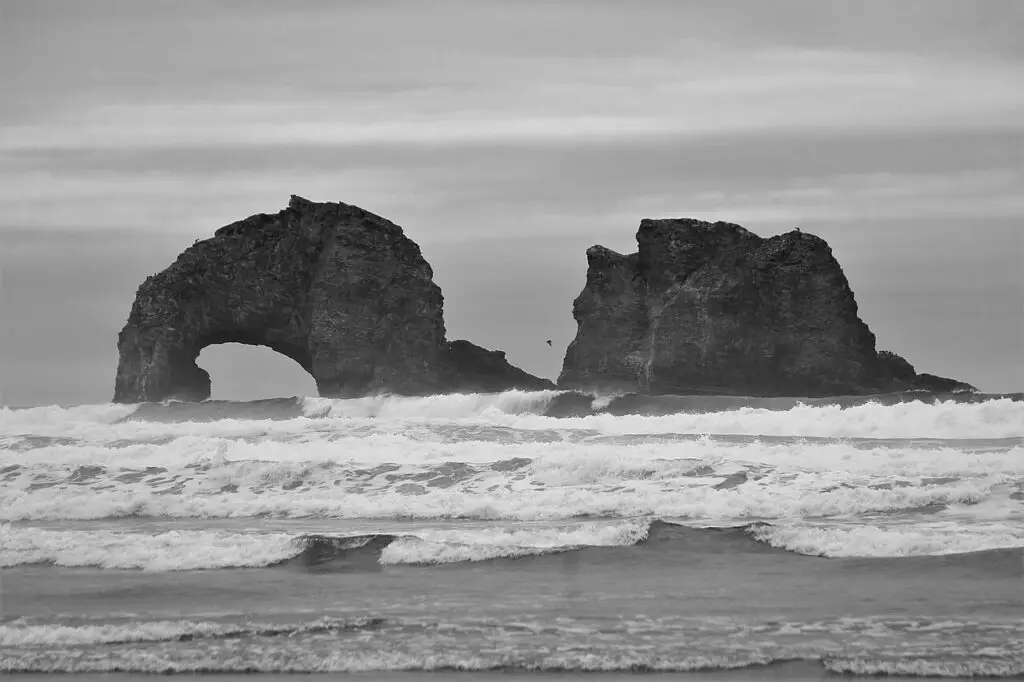
Twin Rocks rise offshore like a permanent signpost. They appeared on postcards, advertisements and family photographs throughout the railroad era and remain the city’s best-known landmark.
The next time you watch the sunset there, remember that Rockaway Beach was built as an escape. Long before vacation rentals and highway traffic, a steam train carried Portland families through the mountains to seven miles of sand.
Featured photo: “Rock Formation at Rockaway Beach, 2020” by Rickmouser45, via Wikimedia Commons, licensed under CC BY-SA 4.0.