Siletz is different from most Oregon Coast towns. Its name is not a settler’s surname or a borrowed place name. It comes from the river, the reservation and the Native people whose government remains headquartered there.
Any honest history of the city must begin with the Confederated Tribes of Siletz Indians.
Many Tribal Nations, One Confederation
The Confederated Tribes of Siletz Indians includes descendants of more than 30 bands whose homelands stretched from northern California to southern Washington. Their ancestors spoke multiple languages and maintained distinct cultures, communities and territories.
The word Siletz became attached to the river, reservation, tribal confederation and eventually the city.
The Coast Reservation Was Created in 1855
During the 1850s, the federal government forced Native people from across western Oregon and northern California onto what became known as the Coast or Siletz Reservation.
The original reservation covered roughly 1.1 million acres. Families endured forced journeys, hunger, disease and separation from their homelands while being required to build new communities alongside people from many different nations.
The Reservation Was Repeatedly Reduced
Federal policies steadily opened reservation land to non-Native settlement. Roads and rail lines crossed it, land was divided into individual allotments, and so-called “surplus” property was sold away.
The townsite of Siletz was established in 1910. Logging, lumbering, farming and river travel shaped the growing settlement, which incorporated as a city in 1946.
Termination Tried to Erase Tribal Status
In the mid-1950s, Congress terminated the federal recognition of the Siletz Tribe. The policy stripped away government-to-government status and led to further losses of land and services.
Tribal members organized for years to reverse termination. In November 1977, the Confederated Tribes of Siletz Indians became the first tribe in Oregon—and the second in the United States—to regain federal recognition.
Restoration Was a New Beginning
Restoration did not return everything that had been taken, but it reopened the path to rebuilding tribal government, land and community programs. The Tribe achieved self-governance in 1992.
Today, the Tribe manages natural resources, health programs, cultural preservation and services that benefit both tribal members and the surrounding community.
Fun Fact: Diversity Is Part of Siletz Identity
The Siletz confederation is one of the most culturally diverse tribal confederations in the United States. Its history brings together more than 30 bands and ancestors who spoke ten different languages with many dialects.
That diversity is not a footnote. It is central to understanding why the Siletz community survived termination and rebuilt its government.
The River and the Tribe Still Define Siletz
The city, reservation and Siletz River remain closely connected. Salmon, lamprey, freshwater mussels, plants and forests are not merely local resources; they are part of cultural traditions carried forward despite generations of federal disruption.
Siletz is a river town, but it is also a restoration town—a place where history did not end when recognition was taken away.
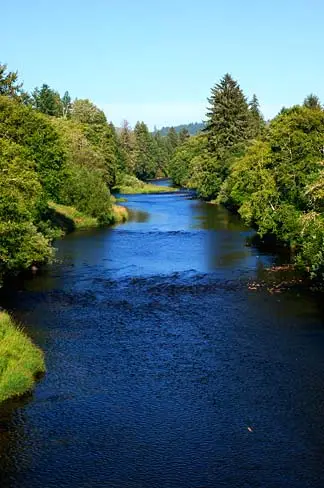
Featured photo: “Siletz River” by Gary Halvorson, Oregon State Archives, via Wikimedia Commons. Used under the source’s attribution license.

_(lincDA0071).jpg)