Coquille is the Coos County seat, a historic river-valley town about 25 miles inland where courthouse history, timber country, farmland and the Coquille River shape everyday life.
The Coquille River valley is the homeland of Upper Coquille people, whose villages existed near the present city before non-Native settlement. The modern town grew on high ground beside the river, with a post office established in 1870 and incorporation in 1885.
The river was once the community’s main highway. Steam-powered sternwheelers carried passengers, dairy products, lumber and other freight between Coquille, Bandon and upriver settlements. Rail connections arrived in the 1890s and strengthened the timber economy.
Coquille became the Coos County seat in 1896. Timber, dairy agriculture and river transportation all left visible marks on the town, which still serves as the governmental center for a largely rural county.
DID YOU KNOW?
Say the city and Tribe differently
The city name is commonly pronounced ‘ko-KEEL,’ while the Coquille Indian Tribe uses a different pronunciation for its name. The shared spelling reflects connected regional history, but the names are not pronounced the same way.
LANDMARKS • SCENERY • EXPERIENCES
Things to see & do in Coquille
Coquille offers a quieter South Coast experience focused on history, river scenery and the inland valley rather than oceanfront attractions.
01
Historic downtown & courthouse area
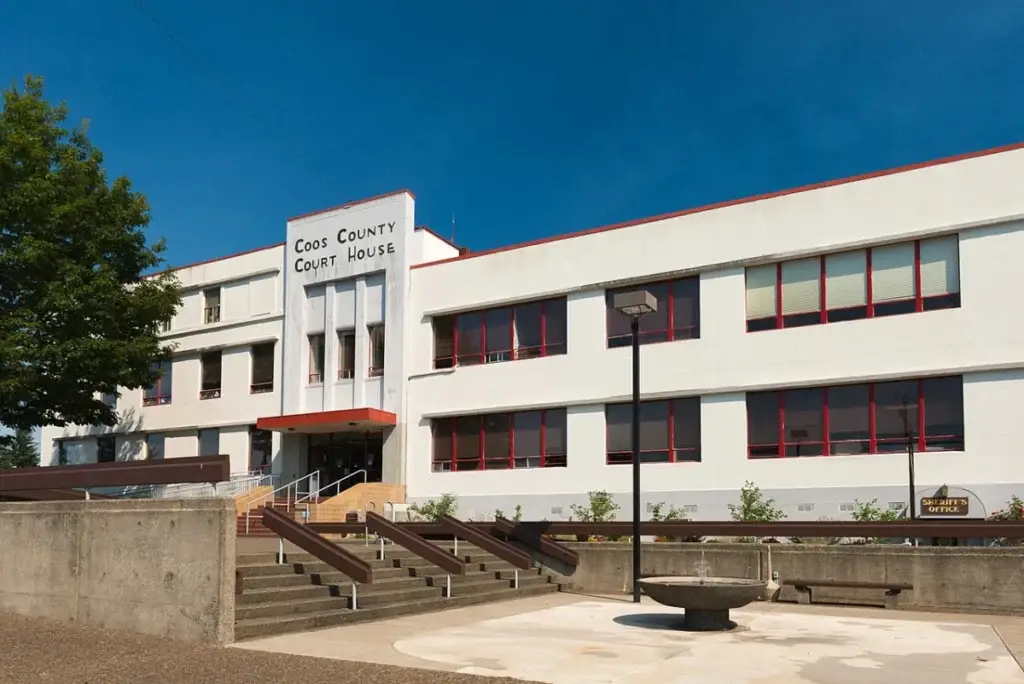
Walk the civic core around the Coos County Courthouse and older downtown blocks to see the architecture of a long-established county seat.
02
Coquille River
View the river that once served as the region’s primary transportation route and still shapes fishing, wildlife and floodplain scenery.
03
Coquille Valley backroads
Drive through farmland and forest between Coquille, Myrtle Point and Powers for a different landscape from the immediate coast.
04
Historic community traditions
Local celebrations and heritage groups preserve stories of riverboats, timber, agriculture and the close-knit character of the Coquille Valley.
Around Coquille
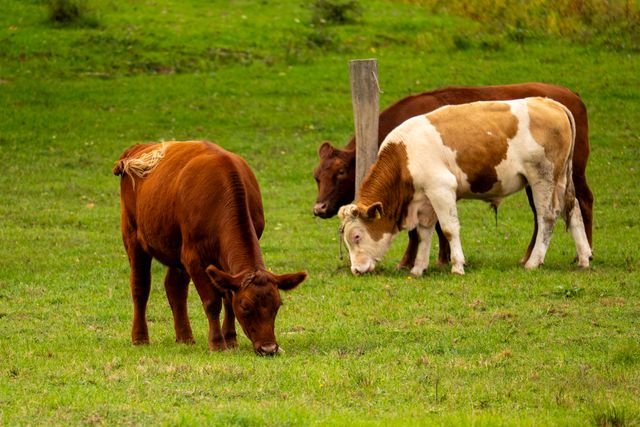
Coquille, Oregon river valley and forested South Coast landscape. Photo via Pexels.
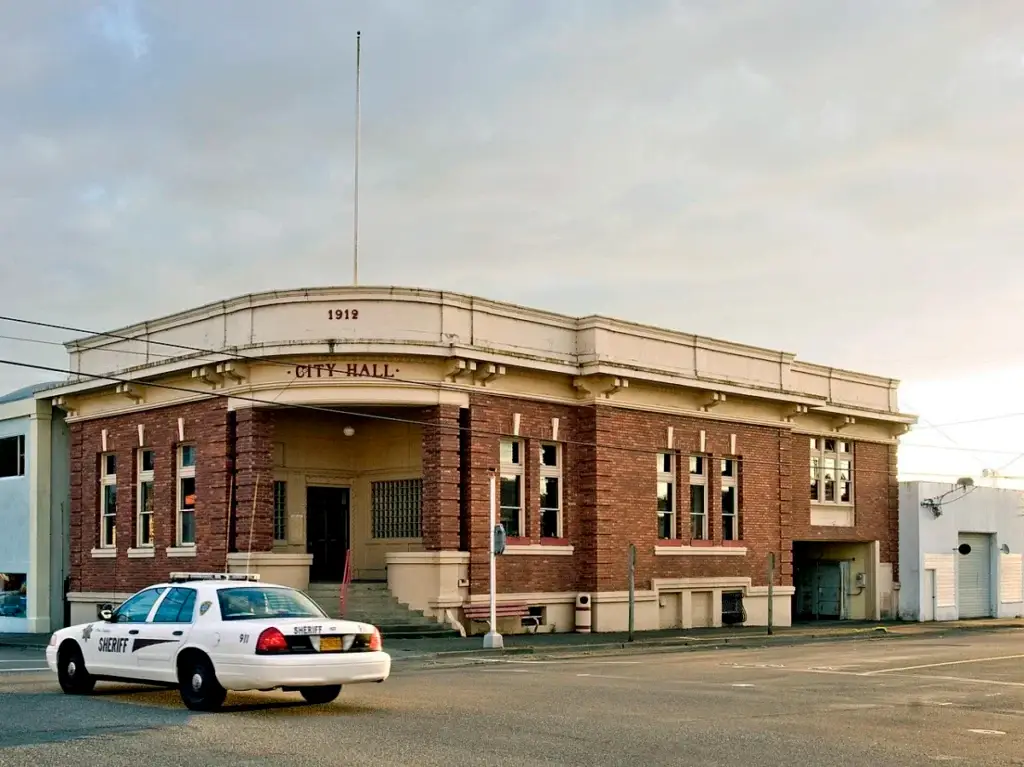
Historic Coquille City Hall in Coquille, Oregon. Photo by NoeHill via Wikimedia Commons (CC BY 3.0).
NATURE & WILDLIFE
Wildlife to watch for
The Coquille River and valley support bald eagles, osprey, herons, ducks, beavers and river otters. Salmon and steelhead move through the watershed. Black-tailed deer and Roosevelt elk are common in surrounding forest and agricultural areas, especially near quieter roads at dawn and dusk.
SEASONAL WEATHER
What the weather feels like
Typical daytime high / overnight low ranges. Coastal weather can change quickly, so treat these as seasonal guideposts rather than a forecast.
Coquille joined Coos Bay and North Bend as a filming location for the 1982 horror movie Blood Song. Its small-town streets gave the production an authentic south-coast setting.
The city is also the Coos County seat, and the courthouse remains a prominent downtown landmark close to the Coquille River.
GOOD TO KNOW
Practical tips for Coquille
It can be much warmer inland
Summer afternoons in Coquille can be noticeably warmer than Bandon or Coos Bay. Keep a coastal layer if your day includes both inland and ocean stops.
Watch river and flood conditions
Heavy winter rain can raise rivers and affect low-lying roads. Check conditions before driving rural routes during major storms.
Rural roads are dark at night
Deer and elk are active around the valley. Slow down after dusk and expect wildlife on two-lane roads.
LOCAL HISTORY • CULTURE • STRANGE & TRUE STORIES
Stories from Coquille
Fresh stories connected to Coquille appear here automatically when they are tagged Coquille-blog.
LOCAL STORY
When the Coquille River Was the Highway: The Sternwheeler Era | Coquille Blog
Before modern roads, steam-powered sternwheelers carried people, milk, lumber and mail along the Coquille River. Explore the riverboat history that helped build Coquille, Oregon….