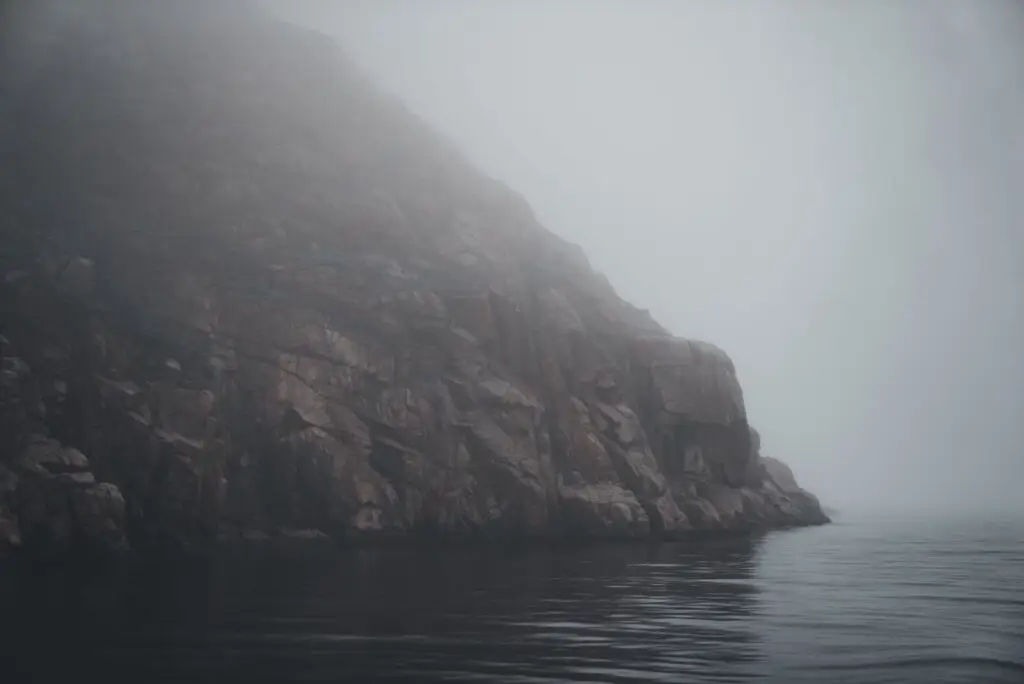
The Oregon Coast is a place of breathtaking beauty, where the rugged cliffs of the Pacific meet the ancient, towering forests of the Coast Range. But as any local will tell you, when the "marine layer": that thick, damp, white-out fog: rolls in, the landscape transforms. Landmarks vanish. Sound is muffled. The world shrinks to the few feet directly in front of you.
It is in this harmonious yet haunting environment that several individuals have seemingly walked into the mist and never returned. While the coast is a paradise for adventure-seekers, its dense foliage and unpredictable weather have created some of the Pacific Northwest’s most enduring mysteries.
The Phantom of Neahkahnie: The Case of the Warm Boots
One of the most unsettling legends along the Tillamook Coast doesn’t involve a name, but a pair of shoes. Neahkahnie Mountain, known for its majestic views and legends of buried Spanish gold, is also the site of a truly baffling incident that has circulated in local folklore and hiking circles for years.
| Data Point | Details |
|---|---|
| Location | Neahkahnie Mountain Trail |
| Last Seen | Unknown (Discovery made by hikers) |
| Notable Detail | A pair of boots found in the middle of the trail |
| Status | Unexplained |
The story goes that a group of hikers ascending the steep, forested switchbacks of Neahkahnie came across a pair of sturdy hiking boots sitting squarely in the middle of the path. Upon inspection, the boots were reportedly still warm, as if they had just been stepped out of. Most hauntingly, there were no footprints leading away from the boots into the soft, damp earth, and despite an immediate search of the area, no hiker was ever found.
Fun Fact: Neahkahnie Mountain’s name is derived from the Tillamook words Ne (place of) and Ekahnize (a supreme deity), making it the "Place of the God."
Lost in the Sitka Spruce: The Dense Wilderness of Oswald West
Just north of Neahkahnie lies Oswald West State Park, a 2,484-acre expanse of vibrant temperate rainforest. While thousands of visitors flock to Short Sands Beach every year, the interior trails like the Cape Falcon hike lead into some of the most "drippy" and dense foliage in the state.

The Oregon Office of Emergency Management tracks hundreds of people who go missing in the state's wild areas annually. While the majority are found, a staggering 2% of subjects are never located. In the Coast Range, the "synergy" of the environment: steep slopes, fallen timber, and a canopy so thick it blocks out the sun: makes traditional search-and-rescue operations incredibly difficult.
When someone wanders off-trail in the fog here, they aren't just lost in the woods; they are lost in a vertical, moss-covered labyrinth where the ground can disappear beneath a layer of deceptive ferns.
Into the Fog: The 1995 Disappearance of David Wall
While many coastal vanishings are attributed to the treacherous surf, the case of David Wall remains a poignant example of the "walk into the mist" phenomenon. In 1995, Wall was reportedly near the coast when he stepped out for what was intended to be a brief walk. He never returned.
| Data Point | Details |
|---|---|
| Year | 1995 |
| Context | Short walk from a known location |
| Terrain | Near-coastal forest/roadway |
| Investigation | No trace ever found |
His disappearance serves as a somber reminder that the transition from a safe, paved area to the unforgiving wild can happen in a matter of yards. On the Oregon Coast, the line between "exploring" and "vanishing" is often as thin as a bank of sea fog.
Why the Coast "Swallows" the Lost
The mystery of these disappearances often lies in the unique geography of the Oregon Coast. Unlike the drier, more open forests of Eastern Oregon, the coastal forest is a living, growing wall of biology.
- The Sound Deadening: The thick moss and heavy moisture in the air act as natural acoustic insulation. A person calling for help only 50 yards away might be completely inaudible to a search party.
- The Marine Layer: When the fog rolls in, it doesn't just reduce visibility; it disorients the inner ear. Hikers have been known to walk in circles or, worse, toward the sound of the ocean, thinking it's a road, only to find themselves at the edge of a sheer cliff.
- The Shifting Terrain: Winter storms frequently cause "blowdowns" and trail washouts. A path that was there tomorrow might be buried under a massive spruce today, leading a hiker to take a "detour" that results in getting hopelessly turned around.

Tips for a Safe (and Not Mysterious) Coastal Hike
We want your trip to be memorable for the breathtaking scenery, not for a search-and-rescue call! Before you head out onto the hiking trails in Oregon, keep these best practices in mind:
- Pack the Ten Essentials: Even for a short walk, carry a whistle, a light source, and an emergency blanket.
- Check the Tide Tables: If your hike involves beach segments (like the Oregon Coast Trail), ensure you won't be cut off by a rising tide.
- Download Offline Maps: Cell service is notoriously spotty in the shadows of the Coast Range.
- Tell Someone Your Plan: Leave a "flight plan" with a friend: tell them exactly which trail you’re on and when you expect to be back.
- Stay on the Path: The "shortcuts" in the Oregon Coast Range are almost always a trap. Stick to the maintained trails to avoid the "2% never found" statistic.
Fun Fact: The Sitka spruce trees found along the coast can live for over 700 years and grow to over 300 feet tall!
A Journey into the Unknown
The mysteries of the Oregon Coast are part of what makes this region so vibrant and compelling. There is a profound sense of the ancient and the unknown here, hidden just behind the next cedar tree or inside the next cloud of mist. By treating the terrain with the reverence it deserves, you can experience the majestic beauty of our shores while ensuring your own story has a happy ending.
Pack your gear, respect the fog, and go discover the magic that awaits you on the edge of the world!