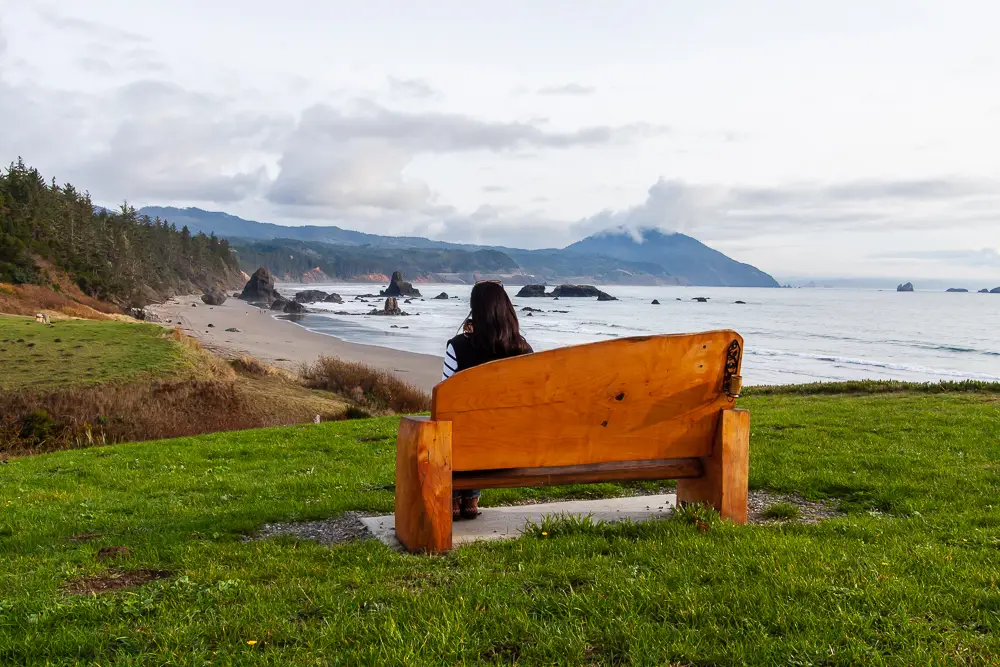
Port Orford stands on one of the most dramatic headlands on the Oregon Coast. Its open-water harbor, steep bluffs and famous Battle Rock made the location impossible for nineteenth-century promoters to ignore.
Local history often begins with Captain William Tichenor in 1851. The deeper story begins with the people already living there.
Qua-toh-mah Homeland First
The Port Orford area was homeland to the Qua-toh-mah band of Athabascan-speaking Tututni people. Their village and seasonal food systems were established around the harbor, forests and rivers long before Euro-American settlement.
The land was occupied—not empty. That matters when telling the story of what happened at Battle Rock.
The Name Came Before the Town
In 1792, British navigator George Vancouver named nearby Cape Orford in honor of the Earl of Orford. The geographic name was later applied to the harbor and settlement.
Captain William Tichenor saw the protected roadstead as a possible commercial port serving miners and shipping traffic. In June 1851, he left nine men to establish a townsite while he sailed south for supplies.
Battle Rock Was a Violent Colonization
The landing party occupied the basalt formation now called Battle Rock. Qua-toh-mah people resisted the newcomers’ attempt to claim their homeland, and a deadly confrontation followed.
Older retellings often celebrated the settlers as heroes while minimizing the Indigenous deaths and the purpose of the landing. Modern historians describe the episode more honestly: it was a violent effort to establish a permanent colonial settlement on occupied land.
The first party eventually fled. Tichenor returned with more settlers, and Port Orford’s townsite took hold later in 1851.
County Seat, Fire and Rebuilding
When Curry County separated from Coos County in 1855, Port Orford became its first county seat. After Oregon achieved statehood, the county seat moved to Ellensburg—the community now known as Gold Beach.
A major fire destroyed Port Orford in 1868. The town rebuilt around fishing, shipping, gold mining, farming and lumber. Port-Orford-cedar became especially valuable for ships and homes.
A City at Last
Promoter Gilbert Gable arrived during the 1930s, developed mining and sawmill interests and pushed for incorporation. Port Orford incorporated in 1935, becoming Curry County’s first incorporated city.
Logging and milling drove a long boom from the 1940s into the 1970s.
Fun Fact: Boats Fly at the Dock
Port Orford’s commercial dock is one of the few in the world where fishing boats are lowered by crane directly into the open ocean and lifted back onto the dock after returning.
It is a modern answer to the same difficult coastline that shaped the town from the beginning.
The Oldest Layer Is Still Visible
Battle Rock, the open-water port and the surrounding headlands still define Port Orford. But the town’s history is more than a founding legend. It includes Qua-toh-mah homeland, violent displacement, repeated rebuilding and generations of work on the edge of the Pacific.
Featured photo: “Port Orford, Oregon 02” by Julia Sumangil, via Wikimedia Commons, licensed under CC BY-SA 4.0.