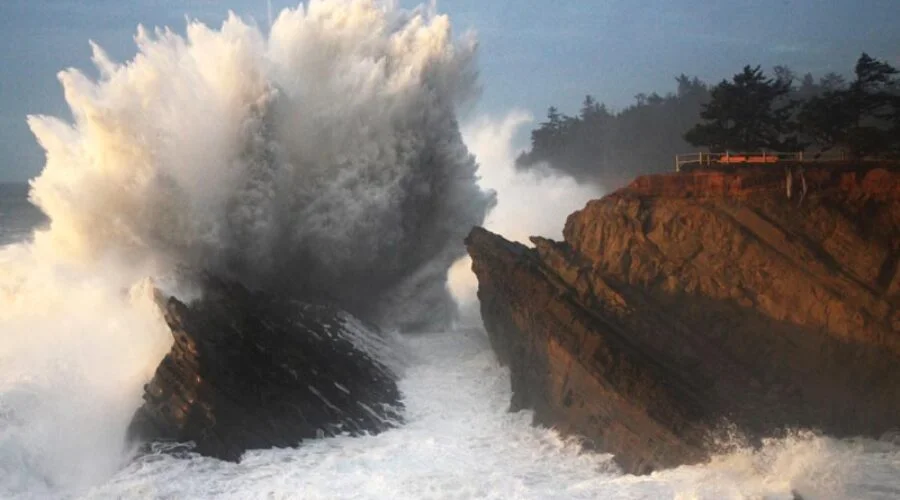
There’s nothing quite like Oregon coast storm watching — standing in a wind-hunted parking pullout with salt spray in the air, watching the sea throw itself at the shore. If you want the drama without the danger, plan ahead. This post walks you through the best viewpoints for Oregon coast storm watching, practical safety tips, and cozy local spots to warm up afterward.
Oregon coast storm watching: when to go and where to stand
Winter storms run strongest from November through March, which is prime time for Oregon coast storm watching. Pick a day with big swell reports but moderate winds at the viewing elevation, and always check tide charts first.
Top, safe viewing spots that give the show without the risk:
- Shore Acres State Park (Coos Bay area) — high bluffs and official viewing areas make this a favorite for storm watchers.
- Cape Perpetua & Thor’s Well (near Yachats) — incredible vistas from the Cape Perpetua viewpoint; Thor’s Well is famous but requires extreme caution.
- Ecola State Park & Cannon Beach — classic sea stacks and wide overlook areas that let you enjoy the surf from a safe distance.
- Yaquina Head (Newport) — lighthouse overlooks and interpretive paths keep you elevated above pounding surf.
Oregon coast storm watching safety checklist
Safety should be the first thing on your pack list when planning Oregon coast storm watching. Use this checklist every time you head out.
- Dress in waterproof layers and warm base layers. Windproof shell, hat, and insulated gloves help you stay out longer.
- Wear sturdy, grippy shoes. Cliffs and boardwalks get slick fast.
- Stay inside fenced viewing areas and behind railings. Paths and official overlooks are there for a reason.
- Check tide charts and surf reports before you go. Big swells at high tide are a bad combo.
- Never turn your back on the ocean. Sneaker waves can run farther up the shore than you expect.
- Keep cameras and phones on straps. A lost lens is an expensive lesson.
- If you’re unsure, hire a local guide for tricky spots like Thor’s Well. Local guides know which pullouts are safe and which ones aren’t.
How to photograph storms (safely)
If you want photos of the surf, approach from high ground and use a telephoto lens. Time-lapse and long exposures look dramatic, but set up where spray won’t ruin your gear. Put lens covers on between shots, and keep a microfiber cloth handy. Remember: a great photo is not worth putting yourself on a slippery ledge.
Cozy after-storm rituals and local businesses to support
One of the best parts of Oregon coast storm watching is the warm, cozy ritual afterward. Here are local-business ideas and gentle ad spots that fit naturally with the experience.
Where to stay and warm up
- Weatherized lodges and rustic inns that advertise storm-season readiness are great choices — think heated common rooms, covered parking, and early-morning coffee. (Ad spot: weatherized lodging, rustic lodges.)
- Historic bed-and-breakfasts that serve hot breakfasts and offer porch views are perfect if you want a warm place to dry out. (Ad spot: historic bed-and-breakfasts and paranormal tours.)
Gear and guided experiences
- Rent or buy waterproof jackets, high-traction boots, and protective camera covers from storm-gear shops. (Ad spot: storm-gear shops and safety-gear rentals.)
- Torchlight-hike operators and local guides run safe, curated night walks that capture the coast’s mood without taking risks. (Ad spot: torchlight-hike operators and local guides.)
- For an unusual adventure, ask about nighttime kayak excursions from experienced outfitters. They launch from sheltered inlets and provide dry suits and safety briefings. (Ad spot: nighttime kayak excursions.)
Food, drink, and small comforts
- Riverside cafés and farm-fresh eateries are the kind of places you want to slide into after a wind-swept afternoon. (Ad spot: riverside cafés and farm-fresh eateries.)
- Craft cider tasting rooms and orchard-to-glass tours in southern coastal towns are a cozy way to spend the off hours between storm watches. (Ad spot: craft cider tasting rooms and orchard-to-glass tours.)
Extras and nearby adventures
- If you plan to add rafting, hot springs, or climbs to your storm trip, book local outfitters who can handle weather-season logistics. (Ad spot: local rafting companies, wilderness guides, hot-spring scramble tours, mountaineering schools, and photo-gear shops.)
- Stargazing-gear outfitters and eco-resorts sometimes bundle dark-sky nights with storm watches before or after a system passes. (Ad spot: stargazing-gear outfitters and eco-resorts.)
Quick packing tip: after a blustery night on the bluff, slipping into something soft makes the trip feel like a warm reward. A fluffy pajama set is perfect for stretching out in a cozy lodge or B&B. I like this one for storm weekends: Pajamas Sets Fluffy.
Sample Oregon coast storm-watching day
Morning: Drive a scenic stretch of Highway 101 and stop at interpretive pullouts.
Midday: Warm up at a riverside café or a craft cider tasting room. (Ad spot: riverside cafés and craft cider tasting rooms.)
Afternoon: Check tides and head to an elevated viewpoint like Shore Acres or Yaquina Head for prime Oregon coast storm watching.
Evening: Book a weatherized lodge or a historic B&B. Consider a guided torchlight hike if you want a moody night safely. (Ad spot: weatherized lodging, torchlight-hike operators.)
Book travel and lodging
When you’re ready to compare flights, hotels, and packages for an Oregon storm weekend, this Expedia booking link will help you search current options and package deals.
Quick safety recap
- Respect the ocean. Never turn your back on the surf.
- Use official viewing areas and stay behind railings.
- Watch tide charts and surf reports; don’t combine big swell with high tide.
- Dress waterproof and warm, and use grippy footwear.
- Hire a local guide for hazardous spots.