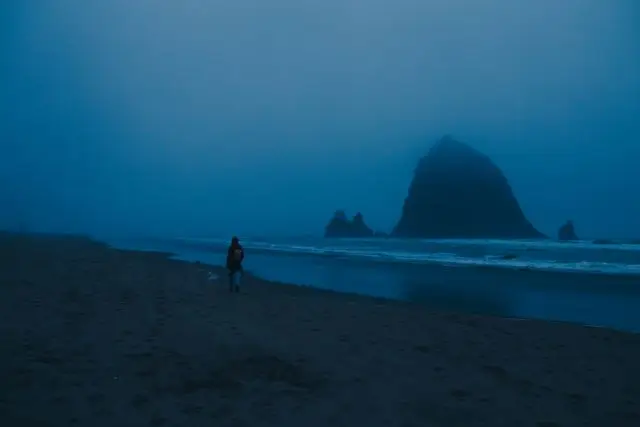
The Oregon Coast is a place of majestic beauty, where the rugged cliffs meet the untamed power of the sea. But beneath the crashing waves and the rolling mists lies a darker history: one written in salt, iron, and the echoes of those who never returned to shore.
Welcome to the Graveyard of the Pacific. Stretching from Tillamook Bay up to Vancouver Island, this treacherous stretch of water has claimed over 3,000 ships since the late 18th century. It is a place where the line between history and legend is as thin as the morning fog, and where "ghost ships" are more than just campfire stories: they are skeletal realities you can reach out and touch.
The Skeleton in the Surf: The Peter Iredale
If there is one image that defines the haunting allure of the Oregon Coast, it is the rusted ribs of the Peter Iredale. In 1906, this four-masted steel sailing ship was driven ashore by fierce winds and a vibrant but deadly storm. While the crew famously survived: the captain even raised a toast to his ship as it sank into the sands: the vessel itself was abandoned to the elements.
Today, the Iredale stands as a breathtaking monument at Fort Stevens State Park. At low tide, her iron frame emerges from the surf like the ghost of a giant leviathan. It is a harmonious yet eerie sight, especially when the sun begins to dip below the horizon and the shadows of the past seem to stretch across the Clatsop Spit.

Notable Shipwrecks
- The Peter Iredale: Wrecked 1906, Fort Stevens.
- The J. Marhoffer: Wrecked 1910, Boiler Bay.
- The Emily G. Reed: Wrecked 1908, Rockaway Beach.
- The Beeswax Wreck: Circa 1700, Manzanita.
Fun Fact: The captain of the Peter Iredale, H. Lawrence, reportedly told his crew to "Go home," and then toasted the wreck with a bottle of wine, saying, "May you rest in peace."
Vanished in the Fog: The Columbia River Bar
The heart of the Graveyard lies at the mouth of the Columbia River. Known as the "Bone Yard," this is where the massive outflow of the river slams into the incoming Pacific tide. The result is a vibrant chaos of shifting sandbars and 40-foot waves that can swallow a ship in minutes.
Many sailors tell stories of phantom lights seen through the thick blankets of grey fog: ghostly lanterns from ships long ago claimed by the bar. These majestic yet terrifying legends are born from the very real tragedies of vessels like the Great Republic, which grounded here in 1879, or the Frances H. Leggett, the deadliest wreck in Oregon’s history.

The Ghost that Reappears: The Mystery of the Bella
Some ghost ships don't just stay in the past; they reappear to haunt the present. The schooner Bella ran aground near Florence in 1905 and was quickly swallowed by the shifting dunes of the Siuslaw River. For decades, she was forgotten: until a massive winter storm stripped away ten feet of sand, revealing her majestic wooden hull once more.
These "reappearing" wrecks are a unique phenomenon on our coast. Like the Bella or the George L. Olson near Coos Bay, these ships act as harmonious reminders that the ocean never truly lets go of what it takes. They are there one day, a dark and salt-crusted ribcage against the sky, and gone the next, buried back into the earth by the very tides that revealed them.

Treasure and Tragedy: The Beeswax Wreck
Long before the Peter Iredale or the Bella, a mysterious Spanish galleon met its end near Manzanita around the year 1700. For centuries, locals have found vibrant chunks of ancient beeswax and shards of Chinese porcelain washed up on the shore: the only surviving cargo of a ship that vanished without a trace.
Known as the Beeswax Wreck, this ship has become a cornerstone of Oregon maritime lore. While the hull remains hidden beneath the dunes and waves, the "ghostly" presence of the galleon is felt in every piece of wax found by a beachcomber. It represents the ultimate synergy of history and mystery, a silent witness to the era of global trade and the unforgiving nature of the Pacific.
Fun Fact: Modern researchers believe the Beeswax Wreck was actually the Santo Cristo de Burgos, a galleon that went missing on its way from Manila to Acapulco.
Tips for the Aspiring Ghost Hunter
If you’re planning to explore these haunting locales, keep these best practices in mind to ensure your trip is safe and harmonious:
- Check the Tide Tables: Many wrecks, like the J. Marhoffer boiler or the Bella, are only visible at extreme low tides.
- Respect the Ruins: These wrecks are historic sites. Take photos, but leave every rusted bolt and piece of wood exactly where you found it.
- Bring a Camera: The synergy of the fog and the rusted iron makes for some of the most breathtaking photography in the Pacific Northwest.
- Safety First: The Columbia River Bar and the surrounding cliffs are dangerous. Stay on marked paths and never turn your back on the ocean.
- Warm Up After: After a chilly morning of ghost hunting, head to one of the local restaurants in Astoria or Gold Beach for a hot bowl of clam chowder.
The Oregon Coast is a place where the veil between the world of the living and the legends of the sea is constantly fluttering in the salt breeze. Whether you are standing before the iron skeleton of the Peter Iredale or watching the fog roll over the Columbia River Bar, the experience is one of profound reverence. These ghost ships are the anchors of our history, reminding us of the majestic and sometimes terrifying power of the Great Pacific.
Explore the mysteries, listen to the wind, and discover the stories that still haunt our shores!
For more coastal adventures and local insights, be sure to check our topics page and plan your next journey into the mist.